Is this guide for you?
- You weigh over 100 kg and find most mattresses compress too quickly
- Your mattress edge sags when you sit on it to get in or out of bed
- You wake with pressure points despite the mattress feeling soft enough initially
- You want a mattress that will hold its support for the long term
Jump to a section
Quick verdict
If you want the shortest route to the right choice, start here.
- Use Quick Buy if you already know your primary problem and want a fast shortlist now.
- Use the quiz if you need us to balance support, temperature, and budget together.
- For most shoppers, the best result is the mattress that fits your position plus body profile.
Best options at a glance
These options cover the most common buying paths for best mattress for heavy people: strongest baseline fit, value route, and a balanced upgrade path.
#1 · Best overall fit for this profile
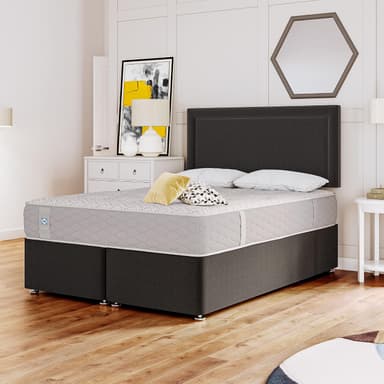
Sealy Steeple Ortho Plus Mattress
Best for back sleepers needing consistent overnight support.
Included for firmer spinal support and longer-term structure.
Approx. £449
#2 · Best value alternative
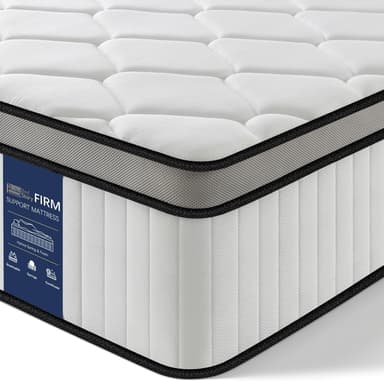
BedStory 12 Inch Hybrid Pocket Spring Mattress
Best for back sleepers needing consistent overnight support.
Included for balanced support, practical value, and reliable everyday comfort.
Approx. £269
#3 · Best upgrade alternative
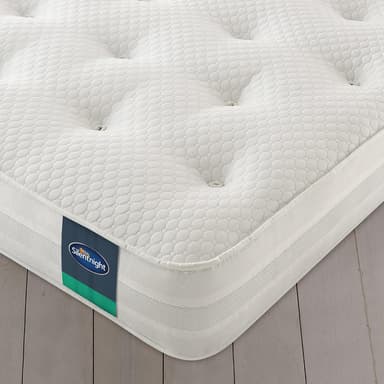
Silentnight 1400 Eco Comfort Mattress (Firm)
Best for back sleepers needing consistent overnight support.
Included for balanced support, practical value, and reliable everyday comfort.
Approx. £349
How we ranked these options
We rank mattresses by topic-fit first, then adjust for support behaviour, motion control, temperature profile, and realistic UK budget fit.
- Topic fit first: position and problem relevance carry the highest weight.
- Performance second: support depth, motion isolation, and cooling shape rank stability.
- Value always: we keep picks actionable with real-world UK price context.
Quick Buy
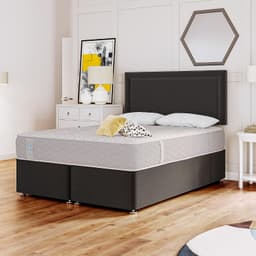
Sealy Steeple Ortho Plus Mattress
Built for heavier loads, firmer support, and reinforced structure.
We use this preset because heavier sleepers usually need stronger structure and firmer long-term support.
Approx. £449
Read full guide for this topic →Shop heavier-sleeper pickWant the full mattress overview?
If you want to compare the whole landscape before diving into specific sleep profiles, start with our central guide.
Read: Best Mattress guide →How the matching quiz works
- Answer a few quick questions about how you sleep
- We match against mattresses verified on UK Amazon, scoring on fit, temperature and budget
- Get a shortlist with reasons, not just a single pushed product
Why heavier sleepers need a different specification
Weight affects every layer of a mattress. A comfort layer that provides 8 cm of give for an average-weight sleeper may compress fully for a heavier person, leaving them effectively sleeping on the support core — which is harder and less contoured. Edge support also degrades faster when more load is placed on it. This is not a design flaw; standard mattresses are simply not built for the top end of the weight range.
Key specification differences to look for
Three things change when the weight requirement is higher.
Higher foam density in the comfort layer
Foam density (measured in kg/m³) determines how well it holds its shape under repeated compression. Low-density foam (under 30 kg/m³) can develop body impressions quickly under heavy use. Look for comfort foam at 40 kg/m³ or above, or a latex comfort layer, which is naturally more resilient.
Higher spring count or heavier gauge springs
For pocket-sprung or hybrid mattresses, a higher spring count or heavier wire gauge means more resistance per unit area. Some manufacturers produce specific 'heavy duty' or 'reinforced' variants; these are worth comparing against the standard version.
Deeper total mattress depth
A mattress of 25–30 cm or more gives more room in the support core before bottoming out. Thinner mattresses (under 20 cm) are rarely suitable for heavier sleepers over extended use.
Edge support matters more than people realise
Heavier sleepers put more load on the mattress edges — getting in and out of bed, sitting on the side at night. A mattress with poor edge support compresses significantly at the perimeter, which shrinks the usable sleeping surface and can cause a feeling of rolling off the side. Reinforced edge support (a firmer foam border around the perimeter springs) is worth specifically checking for.
Firmness rating adjustments
A 'medium' mattress calibrated for average weights will feel softer to a heavier person because more of the comfort layer is engaged. If you are used to choosing medium, consider trying medium-firm or firm — the effective feel will often be closer to what you expected from medium. This is one reason in-store trials can be misleading: the salesperson's experience of 'medium' may not match yours.
Durability and long-term value
A mattress that compresses unevenly within 2–3 years is not a saving. Spending more on higher-density foam and a better spring system tends to extend usable life significantly. Look for at least a 10-year guarantee from the manufacturer, and check whether the guarantee covers body impressions of a specified depth (typically 1.5–2 cm).
Ready to stop guessing?
Answer a few quick questions and we'll match you to mattresses that fit your build, position and budget.
Start the 2-minute quizWhat our quiz looks at
- Your body weight and whether you are above the standard range
- Foam density in the comfort layer (40 kg/m³ or above is a useful benchmark)
- Total mattress depth (25 cm or more recommended)
- Edge support quality
- Manufacturer guarantee length and what it covers
Frequently asked questions
What weight limit should I look for in a mattress?
Most standard double and king mattresses list a weight limit of 120–140 kg per person. Look for this in the product specification. If you are near or above that limit, seek out mattresses with a higher stated capacity or those marketed specifically for heavier sleepers.
Does a firmer mattress last longer for heavier people?
Firmness and durability are different things. A high-density foam in a medium or medium-firm mattress will outlast a low-density foam in a firm mattress. Focus on foam density and spring quality rather than firmness rating alone.
Are reinforced mattresses significantly more expensive?
Often yes, by 20–40% over a comparable standard mattress. The longer usable lifespan tends to make them better value over 8–10 years than replacing a cheaper mattress every 3–4 years.
Is a memory foam mattress suitable for heavier sleepers?
Memory foam can work well if the density is high enough. Low-density memory foam (under 50 kg/m³) tends to develop body impressions quickly under heavier loads. High-density options or hybrid mattresses (springs plus foam) are usually more durable.
Last reviewed: 18 June 2026. We update this guide when our verified UK mattress catalogue changes.